Tag: fantasy books

  • Book Review: Faithbreaker by Hannah Kener

    Book Review: Faithbreaker by Hannah Kener

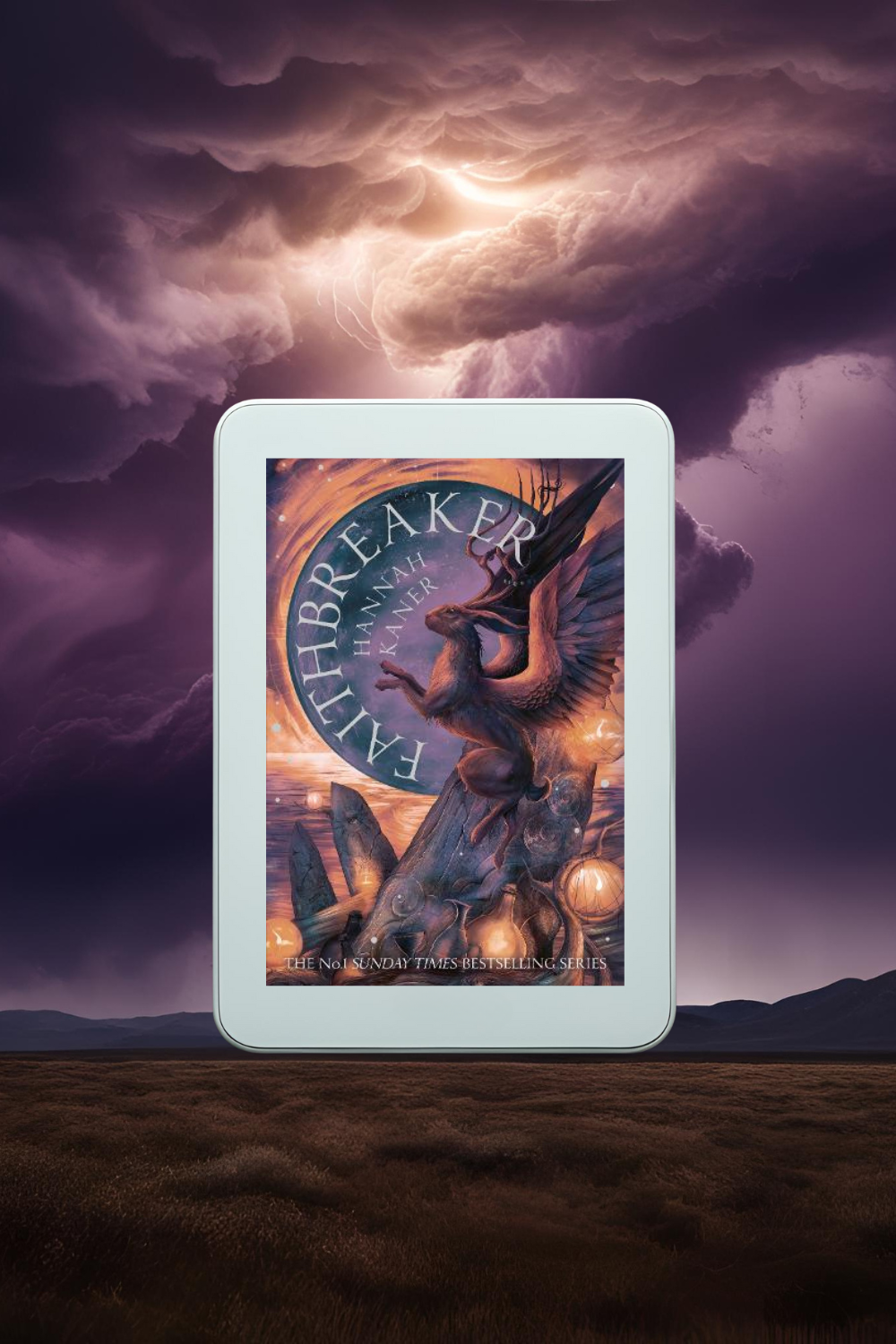
    Faithbreaker, published in 2025, is the third and final book in the Fallen Gods trilogy by Hannah Kaner. It’s a story that explores power, faith, love and sacrifice. It also ended up being a disappointing conclusion to the story for me.

    Fallen Gods #3 | Fantasy | Published 2025

    Overall Rating: ★★★☆☆ (3/5 stars)

    You can read my reviews of Goodkiller and Sunbringer by clicking on the links.

    Spoiler Warning: This review contains major spoilers for Faithbreaker and the entire Fallen Gods trilogy. Proceed with caution if you haven’t finished all three books.

    The third and final book in the Fallen Gods trilogy by Hannah Kaner. It’s a story that explores power, faith, love and sacrifice. It also ended up being a disappointing conclusion to the story for me. If I hadn’t loved the first two books as much as I did, this rating would be even lower.

    My Thoughts

    I’m so disappointed in this book. It feels like all the things I loved about the first two installments came back to mock me here. This might be the greatest “you know what, it’s not you, it’s me” moment I’ve ever experienced.

    The story begins with Lessa Craier taking her ship to Irisa as an ambassador in search of allies. Kissen, Inara, and Skediceth accompany her. After a series of trials, the ship reaches Irisa. Following failed negotiations and a botched mutiny, Lessa—helped by Elo’s mother—returns to Middren with reinforcements.

    Meanwhile, Elogast stays with Arren and is promoted to commander general. They secure a Pyrrhic victory on the battlefield, though their efforts are constantly undermined by scheming nobles and the overwhelming strength of the Talician army and Hseth. Eventually, all characters reunite for one final, desperate confrontation.

    Arren

    There were so many things I wanted to be wrong about, but Arren’s death was a huge disappointment on multiple levels. He had all the makings of a character who could have walked the line between villainy and redemption, but the choice to redeem him only through death felt like a cop-out. I know people love this trope—I don’t. I saw it coming from Sunbringer, and I thought I’d made peace with it.

    But then he dies in the most ridiculous way possible. His cleric convinces his most loyal knight to kill him during a crucial showdown with Hseth. It sounds intriguing on paper, but the execution was so poorly set up that it felt laughable. I literally put the book down when it happened—and with only that chapter and the epilogue left, that’s not when you want to lose your reader. The timing made no sense. It felt like unintentional comedy.

    Skediceth

    Skedi sacrificing himself so Inara could summon the gods should’ve been emotional. Saying goodbye to him was heartbreaking, but his death suddenly being the catalyst to summon all the gods of Middren felt unearned. What should have been an epic finale became a rushed, chaotic mess. I often feel that major deaths at the end are the new norm, but I wish they weren’t because they often feel pointless.

    That said, Skedi getting his own shrine was a beautiful touch. I genuinely loved that. A reborn Skedi in the epilogue would’ve been a stronger ending, but alas.

    Inara

    For someone who drives the plot so much, Inara felt oddly flat and inconsequential. I kept forgetting where she was for most of the book. Her climactic moment felt overpowered and inconsistent with the book’s logic up to that point. By the time the epilogue came around, I’d emotionally checked out so I might have missed it, but it felt like her story did not even reach a resolution.

    Elogast

    Elo’s arc could have been great. He wrestled with grief, duty, and his feelings for Arren. But the romantic payoff between them fell flat. Instead of a well-paced emotional journey, Elo decides to start the relationship with the King when he’s already so deeply shaken that it feels like he’s just doing it because it’s expected of him – by Arren, the reader etc. Their relationship had so much potential, but the resolution felt empty—especially after Arren’s death, which let Elo avoid grappling with the reality of loving someone morally compromised. That was the story I wanted.

    Kissen

    I adore Kissen, but her relationship with Lessa felt forced and added little to the story. Like Inara, she seemed sidelined here, and it didn’t feel like she received her own story or her own conclusion.

    Other Disappointments

    • Deaths felt cheap. I loved Legs, Kissen’s horse, but it’s telling that his death had more impact than the mutiny on Lessa’s ship or the loss of Elo’s comrades.
    • Lessa’s pirate crew. They were cardboard cut-outs whose only function was to die or cause problems. Her legendary pirate status didn’t feel earned, especially given her age.
    • The separation of main characters—again. It didn’t add anything new this time around.

    The Things I Liked

    • The food descriptions in Irisa—mouthwatering!
    • Skedi’s shrine.
    • Kissen and Elogast’s friendship. They had strong BFF vibes in this book, and I really enjoyed that dynamic. It wasn’t well-built, but it worked for me.

    Final Thoughts

    I loved Godkiller, and I liked Sunbringer. Looking back, Sunbringer hinted at the direction Faithbreaker would take—I just didn’t see it. I expected a grand, triumphant finale with my favorite characters working together to save the world. What I got was a flat, rushed story that struggled to tie things together.

    I had a hard time finishing this book. My 3-star rating is based entirely on how much I loved the first two books. If this had been the first or second installment, I don’t think I would’ve finished it. I’ll give this author another chance in the future, but I won’t be rushing to pick up her next release.
  • Book Review: The Tainted Cup by Robert Jackson Bennett

    Book Review: The Tainted Cup by Robert Jackson Bennett

    Overall Rating: ★★★★☆ (4/5 stars)

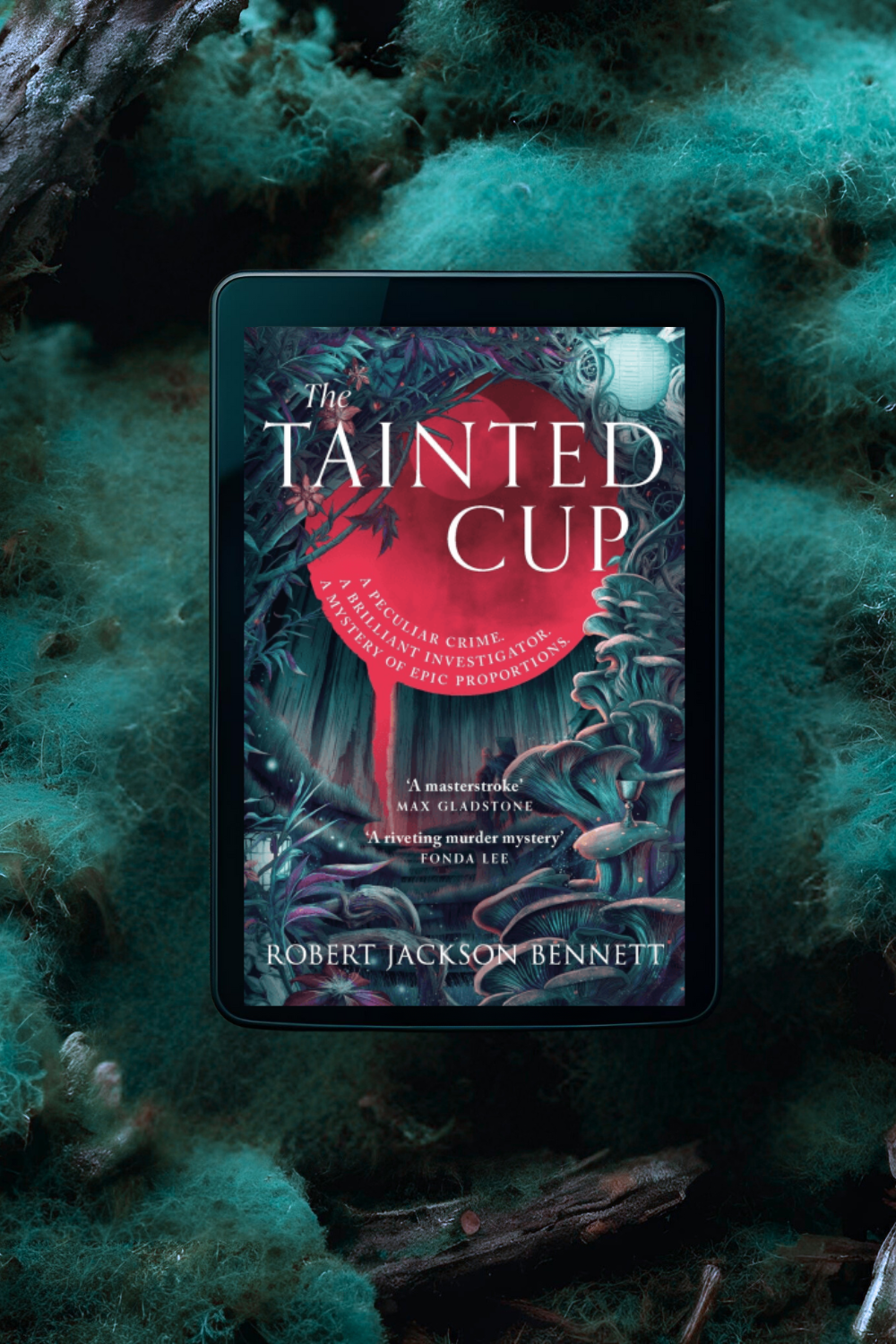
    I’m a little late to The Tainted Cup party. Since its release in early 2024, it’s been nominated for the Goodreads Choice Award in the Fantasy category and has gained quite a bit of buzz. With the second installment out on April 1st, 2025, I figured it was the perfect time to finally dive in.

    First Impressions

    I’d heard that The Tainted Cup was a fantasy murder mystery with rich worldbuilding. That turned out to be both true… and an understatement. The worldbuilding is intense. So intense, in fact, that the first few chapters had a steep learning curve. I love a good Holmes-and-Watson-style duo, and I love a complex fantasy setting—but at times, it felt like the mystery and the worldbuilding were fighting for space rather than complementing each other.

    Our “Watson” is Dinos Kol, the narrator and assistant to Ana Dolabra, an eccentric investigator. While Ana is undeniably intriguing, I couldn’t quite warm up to her. She reminded me of a less likable version of BBC’s Sherlock, and that impression didn’t change much by the end. Of course, this doesn’t mean she’s a poorly written character—in fact, I think she’s amazingly well crafted. It just means she didn’t resonate with me the same way other characters did. I respect her complexity, and I’m curious to see how she evolves in the next book.

    The Plot (Spoilers!)

    In this world, people can be magically—or maybe scientifically is a better term for the world in the book?—altered. Din, for example, has been modified to have perfect memory and is an Engraver. Others are enhanced with perfect vision, strength, or smell. There’s also various types of offices these altered folk can be a part of, but I won’t get into details of it here.

    The story begins with a gruesome death: a man is killed when a tree grows from inside him. Din, with his perfect memory, observes and reports the details to Ana, who quickly solves part of the mystery. This draws the attention of Commander Desmi Vashta, who informs Ana that a recent leviathan breach may be connected—other workers on the sea walls were murdered in the exact same way. Ana and Din are summoned to the city of Talagray to investigate what is now considered a case of mass poisoning.

    There, they meet three investigators already assigned to the case. Suspicion falls on them quickly, as their investigation has several glaring oversights. As events unfold, the mystery leads to one of the most powerful families in the empire—and a string of long-buried crimes. 

    What Worked (and What Didn’t)

    I enjoyed reading this book, but I’m unsure who I’d recommend it to. As a fan of murder mysteries, I appreciated many of the elements—especially how the characters often made discoveries at the same time as the reader. That’s a tough trick to pull off, and Bennett does it well. Still, the mystery left me wanting more. A few plot threads seemed to go nowhere. For example, Ana calls out the investigators for praising Commander Blas and then not reacting when he’s slandered—but that moment is never followed up on. There were several examples like this, and while I get that red herrings are part of the genre, I sometimes found the false leads more compelling than the actual reveals.

    At times, the book also reminded me of a D&D campaign that’s gone slightly off-track—the kind where the game master has an epic story, but the players keep generating unexpected subplots, and the world just keeps expanding to accommodate them. 

    That said, the fantasy aspect of the book is exceptional. By any measure, The Tainted Cup is a high fantasy novel, and the sheer scope and originality of the worldbuilding make it worth reading on that basis alone.

    While Ana and Din are undeniably the leads, I found myself especially drawn to the minor characters. Fayazi of the Haza family, a villainous figure, was utterly fascinating. I would read a whole spin-off about her if the author decided to make it. Another standout was Ditelus, one of the accomplices in the murders. We only see him in his death scene, yet that scene was so powerful it brought tears to my eyes—even though I’d barely gotten to know him.

    Favorite Quotes

    There were also so many memorable quotes. Some of my favorites:

    “But I am reluctant to assume maliciousness when incompetence is a better explanation.”
    Honestly, I want to start including that in at least half of my emails at work.

    Another great line comes from Vashta:

    “I am here to protect the Empire, not deliver justice.”
    That one added real depth to her character and showed how nuanced her role was in the larger world.

    And then there’s this:

    “How simple the titans seemed, and how impossible justice felt.”
    A perfect line, especially considering how much the empire fears the leviathans.

    Final Thoughts

    The Tainted Cup is a genre-defying novel that brings something truly unique to the table. It’s ambitious, intricate, and often breathtaking. While I had some issues—especially with pacing and a few plot threads—I’m still giving it 4 out of 5 stars. I might not be 100% sure how I feel about it… but I do know I want more.

    I’ll definitely be reading the sequel (probably already in my hand as you’re reading this).

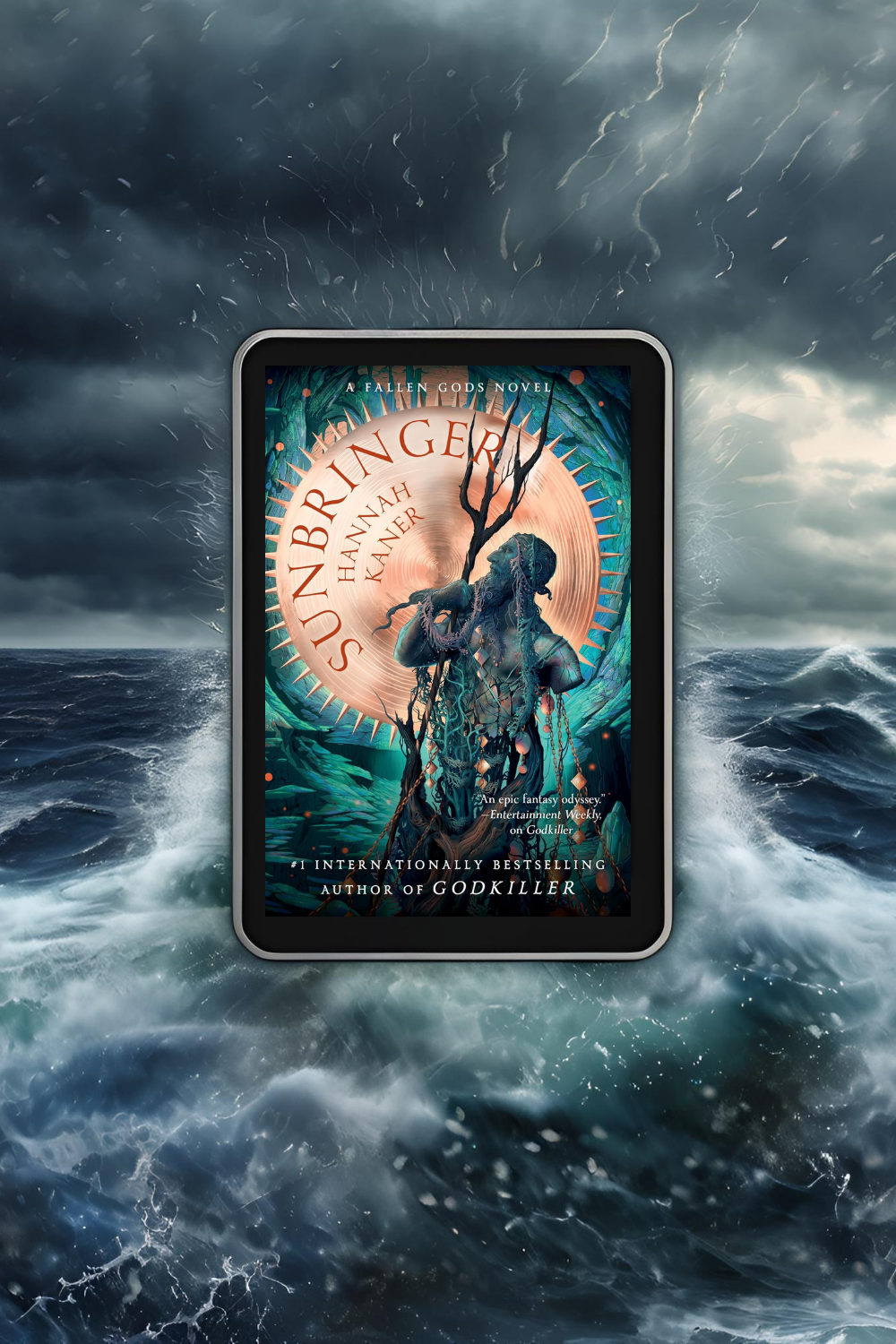
  • Book Review: Sunbringer by Hannah Kaner

    Book Review: Sunbringer by Hannah Kaner

    Fallen Gods #2 | Fantasy | Published 2024

    Read my review of book one, Godkiller, here.

    Overall Rating: ★★★★★ (5/5)

    A slightly unfair but totally deserved five stars. Sunbringer is everything I wanted and more—epic, emotional, and steeped in character development. Despite a touch of “middle-book syndrome,” I loved nearly every minute of it.

    Spoiler Warning

    This review contains spoilers for both Godkiller and Sunbringer. If you haven’t read them yet and prefer to go in blind, consider coming back after finishing the books!

    The Road So Far

    After nearly dying in battle against the fire god Hseth, Kissen is saved by Osidien, who warns her of a war on the horizon. Meanwhile, Inara, Skediceth, and Elogast return to Lesscia. As they each follow their own paths—uncovering godly origins, rejoining the rebellion, and warning the kingdom—their stories eventually converge in the capital, Sakre, where tensions rise and the gods stir once again.

    King Arren: New POV, New Layers

    I have to admit—I loved Arren in this book. He becomes a POV character, which I thought was a brilliant move. I’m really hoping for a redemption arc in book three after spending more time in his head. His final confrontation with Elogast was especially powerful. It becomes clear that Arren deeply loves Elo, and at the heart of his actions is a yearning for the love and family he never had. He was always “his mother’s unloved son,” and all he wants is to be “more than a lonely prince who won a war and no longer had the commander who won it with him.” I’m very curious to see if he survives the trilogy—and whether Elo will ever return his love in the same way.

    Split Party, Strong Arcs: where are our characters?

    Kissen

    I wasn’t the biggest fan of how Kissen was separated from the other for most of the book, but her story arc was strong. She ends up working with the gods—an unusual position for a godkiller—and ultimately delivers the warning of war. I appreciated that her story began in Talicia, her homeland. It gave us insight into what she gave up when she chose another country and another life. I think it’s a feeling a lot of people can connect with, and it added a layer of emotional depth to her journey. That said, I do wish we’d seen more of the trio together.

    Elogast

    Elogast’s chapters were, honestly, a bit slow for me. The battle in Lesscia felt long and drawn out. While I liked seeing Elo in command—especially after hearing how capable he is—the pacing could have been tighter. Still, I found myself admiring him more, especially in his interactions with Lord Yether and Arren. His internal conflict leading up to his decision to kill Arren is one of the strongest emotional threads. In the end, he delivers the killing blow—but to a magical twig-illusion, courtesy of the King. This ends up taking Elo and the King, along with Inara and Skediceth to Arren’s actual whereabouts in Sakre. This is how they end up reuniting with Kissen and Lessa Craier.

    Inara and her mother

    Speaking of Craiers, I suspected early on that Lessa was alive—she’s the only one who can offer Inara the answers she needs. I’m curious how their relationship will develop in the next book. When we meet her, Lessa is leading a successful assault on Sakre, while the King heads for Lesscia. She’s visibly irritated by Kissen and fearful of what Kissen says about Inara. She immediately tries to assert control over her daughter, and I expect that power struggle to continue.

    Inara, meanwhile, is angry, scared, and eager to take part in the fight. When Elo leaves her behind, she takes matters into her own hands. In Lesscia’s archives, she stirs up trouble—but also connects with several gods still alive in the city. I particularly liked her scenes with Scian, the god of the archives, and the rose god Makioron. Makioron’s death was expected but still heartbreaking—he was easy to love. I also found the connection to Yusef fascinating.

    Skediceth

    Skedi’s journey was equally compelling. He learns more about his power and identity, and the bond between him and Inara becomes more flexible, allowing for distance. I did feel for him as Inara formed new alliances with other gods, but I think this shift will help him grow.

    Final thoughts

    Overall, this is a tough review to write. I really loved the book—the characters, the worldbuilding, the emotional arcs—but it did suffer a bit from pacing issues and that classic middle-book slump. Still, the setup for the finale is fantastic. Hseth is reborn, merged with the very metal meant to kill her. Inara must confront her mother and uncover the truth about Lessa. I’m still rooting for Arren’s redemption, and since I’m not fully on board with Kissen and Elo’s romance, I wouldn’t mind seeing Elo move closer to the King and lean fully into his role as a commander.

    Have you read Sunbringer yet? Let me know your thoughts or theories in the comments!

  • Book Review: Godkiller by Hannah Kaner

    Book Review: Godkiller by Hannah Kaner

    Fallen Gods #1 | Published 2023 | Genre: Fantasy

    Please note: this review contains spoilers. If you haven’t read the book yet and want to experience the story unspoiled, now is a good time to stop reading. If spoilers don’t bother you—read on!

    First Impressions

    Godkiller is the first novel in the Fallen Gods trilogy and the debut of Hannah Kaner, published in 2023 by HarperCollins. The shortest version of my review is: I loved the book! The setting was a huge plus—it’s often compared to The Witcher, since our main character hunts and kills monsters… of a sort. But that is mostly where the comparison ends.

    The World

    Kaner creates a vivid world where gods once drew power from offerings and prayers, but are now outlawed. After a brutal war between old and new gods—one that claimed much of the royal family—the new king, Arren, turned on them all. Worship was banned. Gods were hunted.

    We meet Kissen, a fierce godkiller from Talicia, who lost her family to a god of fire named Hseth. Her father worshipped a sea god, and their devotion marked them for sacrifice. Since then, Kissen has lived for vengeance.

    After a job, Kissen meets Inara, a noble girl bound to a god of white lies—Skediceth. Though Kissen wants no part in it, she agrees to help after Inara’s home is destroyed. Together, they travel to the war-torn city of Blenraden, seeking answers.

    The Journey

    Their path crosses with Elogast, a former knight commander known as the King’s Lion. He fought in the war, but was unable to accept the prohibition of gods and distanced himself from the King. Together, this unlikely trio (plus one small god) makes the dangerous pilgrimage to Blenraden. There, the mysteries deepen.

    Elogast came to the city believeing he would help his King and is prepared to sacrifice himself to save King Arren, only to discover a darker truth: Arren plans to offer him up in ritual sacrifice—because he’s the last thing the king still loves. Before he can die, Kissen and Inara intervene. Kissen fights Hseth, giving the others time to escape but apparently falling to her death. Heartbroken, Elo, Inara and Skedi set out to join the rebellion and expose the king’s betrayal.

    What I Loved

    What stood out the most to me were the characters. All four are deeply human (yes, even the god), and I found myself caring for each of them. Kissen’s rough exterior hides a heart I wasn’t expecting. Inara and Skedi’s bond is a complex and fascinating one that I’m eager to explore further. Elogast took me the longest to warm to, but his quiet strength and loyalty grew on me.

    The emotional moments were powerful. One scene that stuck with me was the discovery of the forgotten gods in Blenraden, their shrine ruined and no one worshiping them. The god of broken sandals, in particular, was heartbreaking: reduced to a shell of what he was, simply muttering his last remembered phrases.

    Kaner’s writing also deserves praise. It’s packed with memorable quotes, character motivations in a few tight lines, and vivid descriptions—especially of the gods and their unsettling presence in this world.

    Representation and Inclusivity

    One of the most refreshing things about this book is how queer-normative and inclusive the world feels. Characters come from diverse backgrounds and identities, and none of it is treated like a plot device or checklist. It’s just there, as it should be.

    Final Thoughts

    Godkiller is a thrilling, fast-paced fantasy debut with memorable characters, a fascinating world, and writing that resonates. It’s an easy 5 out of 5 stars for me. It delivers everything it promises—and I, for one, can’t wait for more.

  • Book Review: Crown Duel by Sherwood Smith

    Book Review: Crown Duel by Sherwood Smith

    Crown & Court #1-2

    Sherwood Smith’s Crown Duel, originally published as two separate books, Crown Duel (1997) and Court Duel (1998), is a young adult fantasy set in the fictional land of Remalna. This duology follows the journey of Countess Meliara Astiar of Tlanth, affectionately known as Mel, as she navigates rebellion, political machinations, and the complexities of unexpected love.

    Please be aware that this review contains spoilers. Proceed with caution if you wish to experience the story firsthand.

    Part One: Rebellion and Revelation

    The story starts with Mel and her brother Bran’s rebellion against the King. Their defiance proves surprisingly resilient until Mel’s capture at the hands of the enigmatic Vidanric Renselaeus, Marquis of Shevraeth – who most readers will quickly identify as the primary love interest.

    The first book chronicles Mel’s daring escape and subsequent evasion, only to be eventually caught by the Marquis’s forces and brought to his family’s estate. There he reveals himself and his family to be secret allies and even though Meliara is not happy about it, she and her brother Branaric now confront the King with the Renselaeus. The confrontation leads to the King being killed, and while the Marquise is poised to take the throne, Mel escapes back to her beloved mountains and the sanctuary of her family’s home, reluctant to be drawn further into courtly affairs.

    My experience with the first part was somewhat mixed. While the narrative undeniably kept me engaged, I found myself wishing Mel was more active, as she spends a significant portion of the book unconscious or limited in her actions due to injuries. However, I must commend Smith’s realistic portrayal of Mel’s injuries and their lasting impact – a refreshing change from narratives that often gloss over such consequences. Her initial ignorance of the wider political landscape was also convincingly portrayed. And, surprisingly, even though she is out for most of the book, I found her engaging and holding quite a lot of agency.

    On the other hand, I found her brother, Bran, consistently irritating and simplistic, a trait I suspect was intentional. My frustration reached its peak at the end of the first book, and I wholeheartedly cheered Mel’s flight from both Bran and the Marquis, fueled by their dismissive treatment of her. Despite her naivety in certain areas, Mel had demonstrated bravery and a willingness to learn, qualities that seemed overlooked by those around her.

    Part Two: Courtly Intrigue and Budding Romance

    The second book picks up some time later, with Mel having returned to her neglected castle and using her newfound wealth from the King’s downfall to revitalize it. Her brother, now residing at the royal court, pays her a visit, bringing unexpected guests: Lady Nimiar and the Marquise. In a display of his characteristic lack of consideration, Bran announces his impending marriage to Lady Nimiar without notifying Mel of this before. Though initially resistant, Mel is persuaded by Lady Nimiar to accompany them. Lady Nimiar also offers to guide her through the intricacies of courtly life. From there, Mel navigates the intrigues and gossip of court, along with the plot from the old King’s family to overpower the Marquise and take the throne back.

    Unfortunately, my opinion of Bran did not improve in the slightest. His obliviousness even extends to forgetting Mel’s birthday, a slight that I felt alongside our protagonist. I found him less honest and charming than the other characters seemed to perceive him and more often brash, uncaring, and simply annoying.

    However, the overarching plot of the second book proved to be far more dynamic and engaging. My appreciation for Mel deepened as she adapted to court life with surprising speed, despite her sheltered and unconventional upbringing. Her headstrong nature, while present, rarely felt grating. While perhaps not entirely realistic, her rapid integration into the complexities of court was a delightful aspect of the narrative.

    The Marquis emerges as an intriguing character. While his role as the primary love interest is evident from the outset, I did wish for more direct interaction between him and Mel. Their romance largely unfolds through letters Mel receives from a secret admirer. I don’t think the reader is supposed to be as ignorant of Mel’s secret admirer as she is, which made the eventual reveal somewhat anticlimactic. Yet, upon reflection, the understated “of course it was you” quality of their connection has a certain charm. I also appreciated the Marquis’s quiet competence and unwavering commitment to doing what is right.

    I did not particularly like the fact that most of the court uses a fan language to communicate. The premise was that it got popular because everyone but the King knew it, but it genuinely confused me that people kept using it to convey secret messages even after the King was gone and everyone, presumably, knew what everyone else was saying, eliminating the secrecy of it.

    Despite these minor reservations, Crown Duel proved to be an incredibly enjoyable read. Sherwood Smith’s engaging writing style made both books fly by in just a few days of leisurely reading. It’s a delightful and relaxing escape, making it an easy recommendation for anyone seeking a light and (relatively) short fantasy adventure.

    Overall, I’d give this duology a solid 4/5 stars.