Tag: fantasy books

  • Book Review: Hemlock&Silver by T.Kingfisher

    Book Review: Hemlock&Silver by T.Kingfisher

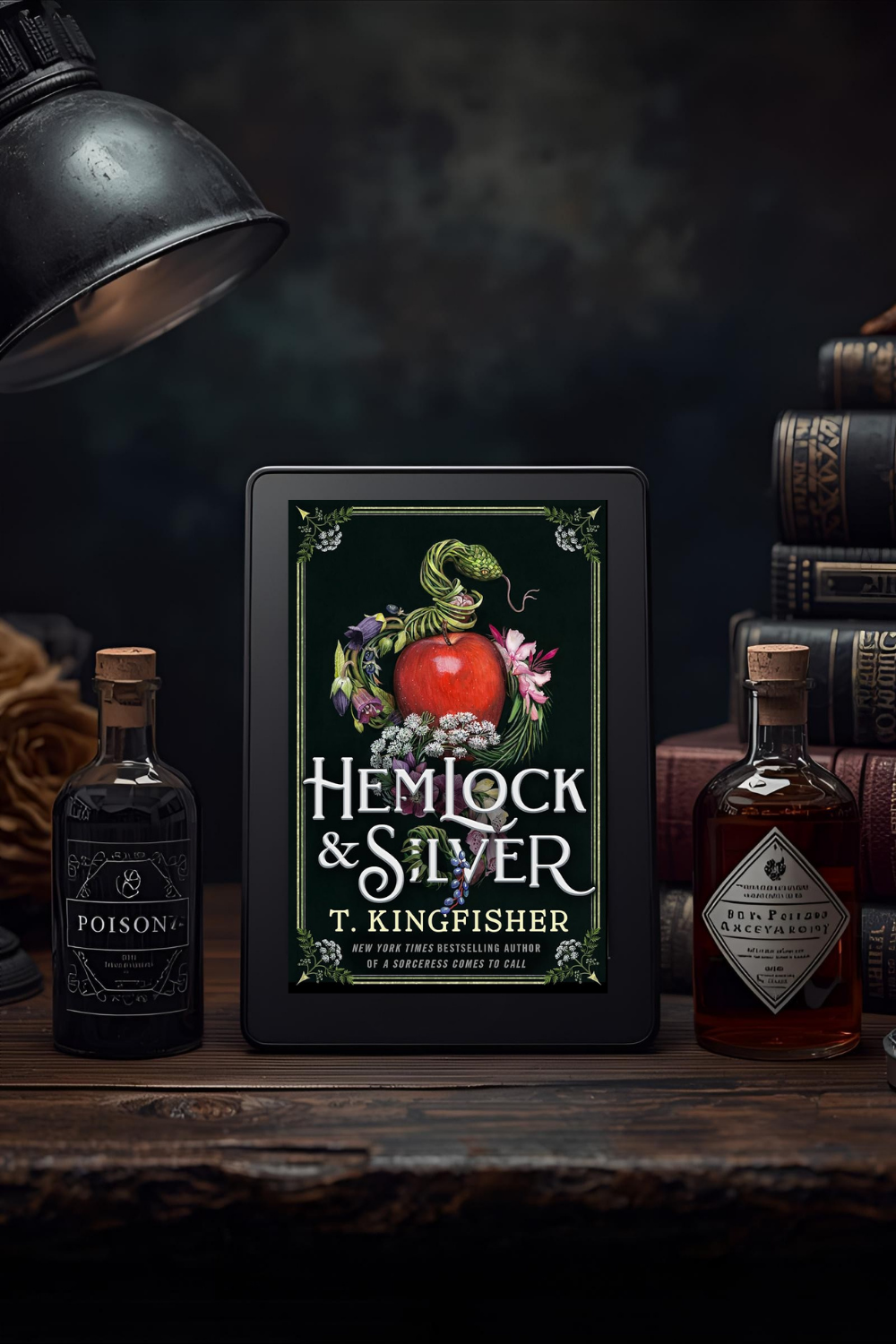
    Hemlock & Silver is a standalone novel by T. Kingfisher, published in 2025 and marketed as a dark retelling of Snow White.

    I don’t usually gravitate toward fairytale retellings, and I’ve also been reading a lot of standalones lately. I’m mentioning this because it might have influenced how I felt about the book. To be honest, I didn’t particularly like Hemlock & Silver—but I didn’t dislike it either. It landed somewhere in that strange middle ground of “good, but not quite memorable.”

    Would I still recommend it? Actually, yes. It’s a quick, entertaining read with an easy writing style that makes it perfect for a weekend or seasonal pick-up. Even though it didn’t fully click with me, I enjoyed the time I spent reading it.

    Characters

    We follow Anja, a healer who specializes in poisons. I appreciated her pragmatic, almost old-fashioned approach to science and her curiosity about the natural world. She’s practical and unflappable, sure, but I found her lacking depth. There’s also a vague sense that I have seen this character a few times now, both in Kingfisher’s works and other books.

    Unfortunately, the supporting cast didn’t help matters. Princess Snow barely registers as a real person; she’s more of a plot device than a character. The guards, including one who becomes Anja’s love interest, felt equally flat. Their dialogue and interactions were fine, but they never left an impression. When the romance appeared, it felt sudden and unnecessary rather than meaningful.

    Plot and Pacing

    As a retelling, Hemlock & Silver plays fast and loose with its source material. Normally, I’d appreciate that. However, the story often felt too detached from the original fairytale, like it was following a roadmap it didn’t care much about. The pacing felt off too, because there was a sense of urgency in the storytelling that didn’t quite manifest in the characters, if that makes sense.

    There were also a few moments where the internal logic didn’t hold up. For example, when characters dramatically warn that eating two apples could be fatal, but later someone eats five and survives quite easily, all things considered. Those inconsistencies pulled me out of the story and made the stakes feel less real.

    Writing and Atmosphere

    Kingfisher’s writing remains as sharp and darkly witty as ever. She has a way of blending horror and humor that feels unique to her. The mirror world sections were particularly compelling.

    That said, the worldbuilding outside those moments felt a little thin. It gave me just enough to understand what was happening, but not enough to get fully immersed. I kept wishing the book would slow down and linger on its atmosphere, because when it does, it shines.


    Final Thoughts

    In the end, Hemlock & Silver was a good October read. It was short, spooky, and clever in places. I didn’t love it, but I didn’t regret reading it either. It’s the kind of book that scratches an itch for reading without demanding too much emotional investment.

    If you’re new to T. Kingfisher, though, this wouldn’t be the one I’d start with. She has stronger, more cohesive works that better showcase her storytelling and worldbuilding strengths. Still, for a moody autumn evening, Hemlock & Silver is a decent choice.

  • My Cozy Autumn Reading List

    My Cozy Autumn Reading List

    Happy Autumn, everyone!

    It’s officially the start of the best time of the year: crisp air, falling leaves, rainy afternoons, and all the baked goods. For me, autumn is also mood-reading season. When the sweaters come out and blankets pile up on the couch, I crave books that feel like that: warm, comforting, maybe a little mysterious.

    This fall, I’m planning to dive into a mix of new releases and some books from last year that I didn’t  get around to and that just feel like perfect autumn reads. My pace will probably be one to two books per month, which means I’ve prepared five books for my autumn reading list, enough to carry me from September through November. Each one captures a different side of the season: some are cozy and whimsical, others a little dark and magical, perfect for curling up with a hot drink and letting the world drift away.

    These are not recommendations per se, given that I haven’t read these books yet, but I hope this list gives you a few ideas of your own, or that you’ll share your opinions on them if you already had the chance to read them. I’ll also post reviews for some of these books as I go through them, so keep an eye out if you’d like to see what I thought of them. If you’d like to read something and want my recommendations, you can find my ideas here

    Without further ado, let’s get to it.

    The Very Secret Society of Irregular Witches by Sangu Mandanna

    A cozy fantasy novel first published in 2022, it’s described as a warm and uplifting novel about an isolated witch whose opportunity to embrace a quirky new family—and a new love—changes the course of her life.

    Why I’ll be reading it: I’ve heard so many great things about this book, and I expect I’ll love it for its cozy and slightly witchy vibes. I’m also curious about the next installment, so I’m starting with the first book to continue the story.

    The Art of Vanishing by Morgan Pager

    The Art of Vanishing is Morgan Pager’s debut novel, released in July 2025. It is described as “a stunningly original love story between a museum employee and the man in a masterpiece hanging on the walls—a breathtaking debut about time, art, and the enduring power of love”.

    Why I’ll be reading it: This book came out in the same year as the videogame Clair Obscur: Expedition 33 and it seems to have some similarities to it, which is a fun coincidence. While I seem to be the only person in the world who didn’t quite enjoy Expedition 33, I will be reading this book because I do like the premise and I am very curious about the blend of historical fiction and fantasy.

    The Enchanted Greenhouse by Sarah Beth Durst

    Published in 2025, this cozy fantasy is the sequel to The Spellshop and follows the story of the creator of Kaz, the talking spider plant from the first book. It’s described as “funny, kind, and forgiving—a story about giving second chances—to others and to yourself.”

    Why I’ll be reading it: I may bump this one up in my schedule because I want to experience the vibes of The Spellshop. The author also did a great job of teasing the character in the previous book, so I’m excited to learn more.

    A Witch’s Guide to Magical Innkeeping by Sangu Mandanna

    Set in the same universe as The Very Secret Society of Irregular Witches, this 2025 cozy fantasy is described as a whimsical and heartwarming novel about a witch who has a second chance to get her magical powers—and her life—back on track.

    Why I’ll be reading it: The witches, the autumn vibes, and the cozy feel of the story.

    Hemlock & Silver by T. Kingfisher

    Published in August 2025, this is described as “a dark reimagining of ‘Snow White’ steeped in poison, intrigue, and treason of the most magical kind.”

    Why I’ll be reading it: It’s T. Kingfisher. I’m hoping for her signature prose and compelling characters, and the premise sounds absolutely intriguing.

    Okay, I lied. There is one more book I hope I’ll get around to:

    Katabasis by R.F.Kuang

    Another August 2025 release, Katabasis follows “two graduate students who must set aside their rivalry and journey to Hell to save their professor’s soul, perhaps at the cost of their own.”

    Why I’ll be reading it: I had planned to read it during the summer, but some mixed impressions from other readers made me postpone it. I generally try to avoid hearing other people’s opinions before reading a book, but it’s been hard to do with such a highly anticipated release like this. I hope to tackle it in November, but I won’t be pushing for it.

    That’s all I have for this autumn! It’s a slightly short list, but I prefer setting achievable reading goals, and I can always add more if I finish these quicker than expected.

    I hope this list gives you some inspiration for your own autumn reading. If you decide to pick up any of these books, or if you’ve already read them, drop a comment! I’d love to hear your thoughts and recommendations.

  • 5 Fantasy Reads That Feel Like Autumn

    5 Fantasy Reads That Feel Like Autumn


    It’s September, which means that no matter what the actual temperature is, it’s officially autumn. I’d say I’m being pretty restrained here, since I’ve already seen autumn collections and seasonal prep popping up as early as August, which even I think is a bit premature. But it’s here now, and autumn means reading! Not that other seasons mean not reading, but it somehow feels even better when the weather turns a bit colder. Still, as you cozy up with a hot chocolate, a great tea, or even a late-night coffee (I do it, don’t judge me), you’ll need a good book to go with it.

    When I think of autumn, I think of both cozy vibes and darker ones. Early in the season, it feels right to start with some comforting, cozy fantasy. But as the nights grow longer and Halloween approaches, I start craving the horror and the mystery a bit more. 

    That’s the mix I’ve put together for you today: a list of five books, some recent and some much older, that should carry you through until late November if you read them all. Or maybe you just want one great pick. Or maybe you’re a fast reader who can finish them all in a month and come back looking for more. Whatever works for you! I’ve ordered these in the order I would pick them up in, but feel free to mix and match as much as you like. It’s your reading list, after all.

    I also have a post with my own seasonal reading list—five books I plan to read through September, October, and part of November. Feel free to join me if you’re looking to pick up some more recently published titles. For this post, though, I’m focusing only on books I’ve already read and can confidently recommend.

    Let’s get into it!

    The Spellshop by Sarah Beth Durst

    The author has said she wanted to write a book that felt like drinking hot chocolate, and I think she succeeded. The story follows a librarian fleeing the war-torn capital and returning to her home island, where she starts over. There’s also a dreamy love interest and a cast of funny, lovable side characters. Honestly, if this were a movie, I’d have it playing on repeat.

    This is also a perfect transition book for the season. It’s set on a sunny island with descriptions of beaches and warmth, but it also features spells, talking plants, and homemade jam. The stakes are low even for cozy fantasy, but I didn’t mind at all. It makes for a very fast and comforting read.

    Read this if you love: cozy fantasy, cottagecore vibes, talking plants, and a touch of romance.

    A Sorceress Comes to Call by T. Kingfisher

    At this point, T. Kingfisher hardly needs an introduction. She’s one of the rare authors whose books I’ll pick up without hesitation, and if you haven’t had the chance to read her works yet, drop everything you’re doing and read Nettle&Bone. However, if it’s just this book that’s new to you, A Sorceress Comes to Call is a retelling of a Brothers Grimm fairy tale, so you know it leans a bit dark. It feels very much like a fairy tale for adults and is perfect to read as the leaves start to fall.

    The story follows Cordelia and her mother, a witch who sets her sights on marrying a wealthy man for money and influence. But the man’s sister, Hester, sees through her almost immediately and begins working against her with Cordelia’s help. I won’t spoil too much, but I’ll just say: pick this one up. It’s a quick read, darker than cozy fantasy, but without world-ending stakes. And, as always with Kingfisher, the prose and pacing are spot-on.

    Read this if you love: fairy tale retellings and dark twists

    The Goblin Emperor by Katherine Addison

    This is one of the most underrated standalones I’ve ever read. I actually found it thanks to Elliott Brooks’ YouTube channel, and she talks about this book very often, but other than that, it doesn’t get talked about nearly enough. Perhaps that’s because it’s nearly 10 years old at this point. If you haven’t read it, this autumn is the perfect time.

    The story follows Maia, the half-goblin son of an Emperor who dies along with his other heirs under suspicious circumstances. Maia finds himself on the throne, struggling to navigate court politics despite a lifetime of seclusion and inexperience while also trying to investigate what happened to his father and brothers.

    This book is political fantasy at its best, with worldbuilding that makes it feel more epic than you’d expect from a standalone. While there are companion works set in the same world, you don’t need to read them to enjoy this book, but if you love it, there’s more to explore.

    Read this if you love: court intrigue, political fantasy, underrated gems, and kind-hearted protagonists.

    Gallant by V.E. Schwab

    Another author who hardly needs an introduction. Gallant doesn’t get mentioned as often as some of Schwab’s other works, but I really enjoyed its gothic and horror elements, which are perfect for late autumn.

    We follow Olivia, an orphan who longs for a home. When she’s suddenly taken in by an uncle she never knew existed, she’s brought to his estate, Gallant. But, of course, things are not what they seem, and Olivia soon finds herself unraveling a chilling mystery.

    Read this if you love: gothic settings, haunted houses, eerie atmospheres, and a touch of horror.

    Bury Our Bones in the Midnight Soil by V.E. Schwab

    The most recent publication on this list—and yes, another Schwab book (you probably saw this one coming). It’s a vampire story that’s perfect for Halloween reading, but it also delves into much heavier, more serious themes. We follow the stories of three queer women as they navigate love, hunger and new beginnings.

    Read this if you love: vampire stories, gothic drama, Halloween reads, and morally complex characters.

    Curl Up & Read

    Whether you’re looking for a cozy escape with spells and jam, a gothic tale full of secrets, or something a little darker to carry you into Halloween, these five books make the perfect companions for autumn. If you’ve already read them, do check out my reading list so you can find more recommendations there. 

    So grab a blanket, pour yourself a warm drink, and sink into one of these stories. And if you pick up any of these books, I’d love to hear what you think—drop me a comment or connect with me on Goodreads.

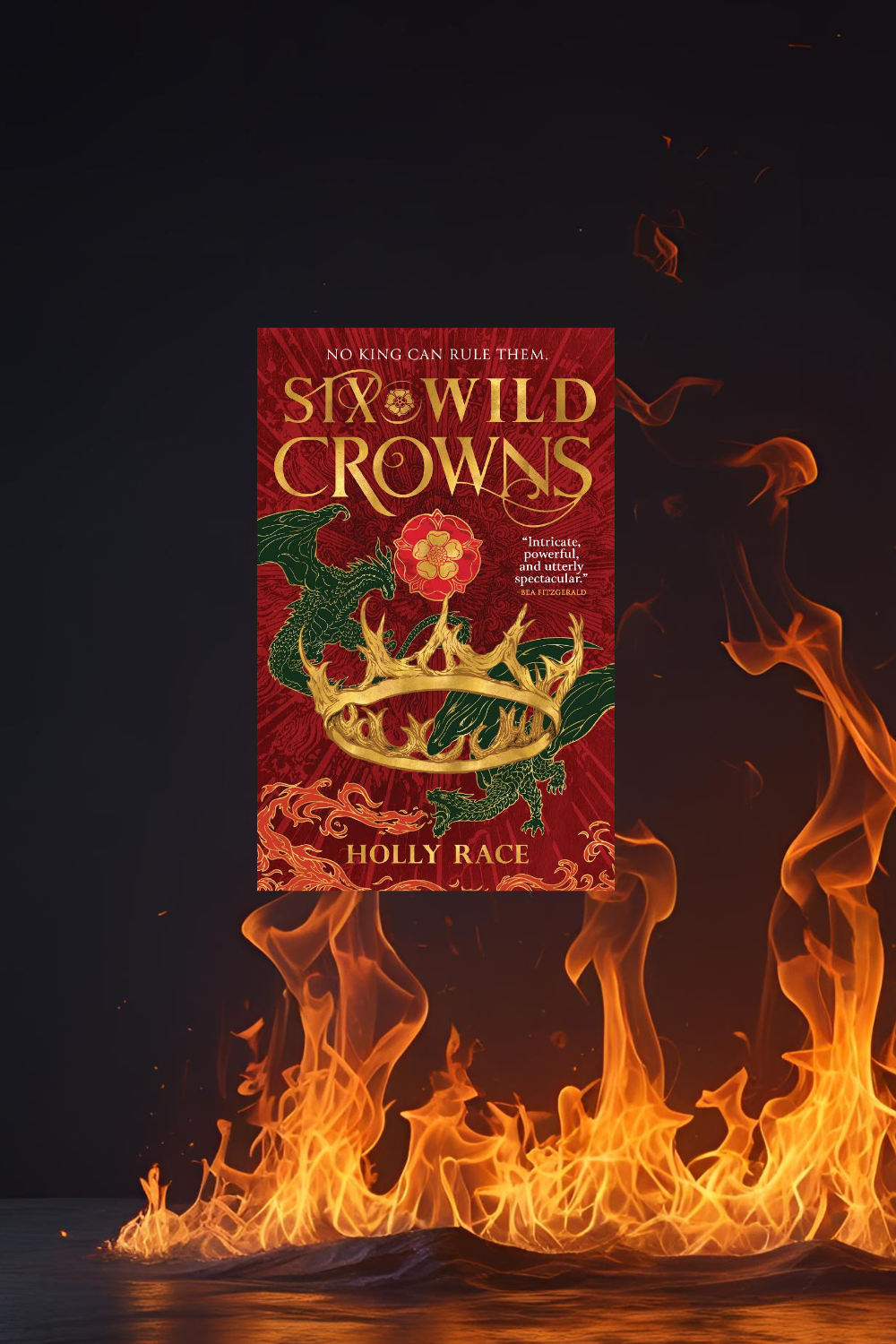
  • Book Review: Six Wild Crowns by Holly Race

    Book Review: Six Wild Crowns by Holly Race


    Queens of Elben #1 | Fantasy | Published 2025

    Overall rating: ★★★★☆ (4.5/5 stars)

    Six Wilds Crowns is the first book in the Queens of Elben series, written by Holly Race and first published in 2025. It’s inspired by the six wives of Henry VIII.

    The premise of this book seemed tailor made for me. I love history, especially Tudor England, and I love fantasy. And while this was not a perfect read, it was still amazing and I enjoyed it a lot. 

    Please note: This review contains spoilers. If you haven’t read the book and prefer to go in blind, consider returning after you’ve finished it.

    Historically accurate?

    If you are looking for historically accurate representations of the six queens of Henry VIII, this is not it. The six women are much more fantasy oriented, and they take power without truly wanting the power and are (mostly) easily swayed to do the right thing. Not to say that the women these characters are inspired by were not good women (lots of discussion out there on that, if you’re interested), but their lives had far less dragons in them and far more court navigation and compromises. 

    But while the characters and the story were not historically accurate, the stories of the six women were inspired by historical events, which does set up some expectations if you are aware of the history. For example, the book starts off with Seymour as a lady in waiting, but if you happen to know that Jane Seymour was one of the wives of Henry VIII, you might reasonably expect her to end up married to the King in this story too. I thought the author did a lovely job of balancing the expectations and delivering on them in a new way or subverting them cleverly. 

    The Story

    In the kingdom of Elben, a magical tradition demands that the king must marry six queens and magically bind each to one of the island’s palaces to protect the kingdom from its enemies. The King is, of course, Henry, inspired by Henry VIII. We focus mostly on Boleyn as we follow her from her wedding to her apparent death. She marries Henry out of love, but quickly gathers there is something wrong with the land and the role of the queens. She starts to rebel and gather the other queens to her cause. Her first and strongest ally is Seymour. Initially sent to Boleyn’s court as a spy and assassin, Seymour unexpectedly catches the king’s eye—and Boleyn’s. Their relationship evolves from tension to an unlikely but powerful alliance. 

    The Issues

    While this was a highly enjoyable read, there were some things that bothered me. The first and most obvious was the naming of the characters. All of the female characters go by their surnames and do not have names aside from them. I understand it would have been very difficult to have three Catherine’s and two Anne’s running around, just to name the most obvious problem, but I was rather bothered by this. My mind kept supplementing the first names. I wonder if it’s maybe a set-up for a later book in which the characters could take actual names for themselves? It is a minor issue to be sure, but one I couldn’t overlook for the whole book. 

    The other thing was romance, which felt just a bit lacking. Or, to be more precise, I felt as if the characters were instantly in love every time. This applies to Henry and Boleyn, Henry and Seymour, Seymour and Boleyn and even the hint of Cleaves and Seymour. Of course, it bothered me most in the case of Seymour and Boleyn. It’s a big plot point, as it influences most of Seymour’s actions throughout the plot. What I did find refreshing is that it’s established the love is one-sided, but this is just a fact of life. There’s no anger because of the unrequited love, just acceptance. It certainly feels as crucial because it motivates Seymour to care for the events of the plot, but I just wish it felt less like insta-love, honestly.

    My final problem with the book was that I felt like time was very muddy. By the end of the book, two years have passed and I found it difficult to really place the passage of time throughout the book. 

    The Good Parts

    I really enjoyed the play with history. The author took real people and events and used them as inspiration. She leaned heavily into the fact that all the queens were followed by rumours and stereotypes and played with it as a point in the story and as a way to keep the reader guessing. As stated before, major spoilers, but Seymour gets pregnant quite soon and I expected the story to deal with the fact that she would give birth to a son, but she instead decides not to have the baby, which I thought was an interesting twist. It was especially enjoyable as the real Seymour is often seen as very motherly, even though she died very soon after giving birth to her only son, and in this story, I feel like she is anything but motherly.  

    I also think every modern adaptation of Anna of Cleaves decides to paint her as the most independent woman ever, and quirky whenever she can be. The real Anna of Cleaves got a peaceful divorce and profited from it so she’s often seen as the one who got away and I feel like that is always used to the max in modern adaptations. Here she is a strong woman doing her thing, and I loved that. 

    I felt just a tad disappointed with how Catherine of Aragon was interpreted in this book, but that might be because she is my favourite. I do think that the real Catharine was a powerful woman with strong goals and I never got the impression something like love would ever give her pause in going after what she wanted. Then again, in this book, Aragon is also strong-willed and clever. The fact that she might love Henry is thrown out there, but she was brought up to think it was her duty to serve a man as a queen consort, and she isn’t able to break free from this throughout this book. She was looking out for her daughter and she was unwilling to exchange submission to one sovereign in favour of the other, which does speak of her practical side. She clearly tells Boleyn that she would have to be convinced that Boleyn would lead them into an era in which all six queens were equal, not one in which Henry was replaced by Boleyn. 

    I like how religion was once again central in the struggle for the land itself. It was a major point of contention in Tudor England and Europe too, and to see it translated like this into a fantasy world was intriguing.

    Conclusion

    All in all, I will very happily tune in for the next installment. I look forward to seeing what else is in store. An absolute recommendation from my side, and I’d love to hear your thoughts on the book!

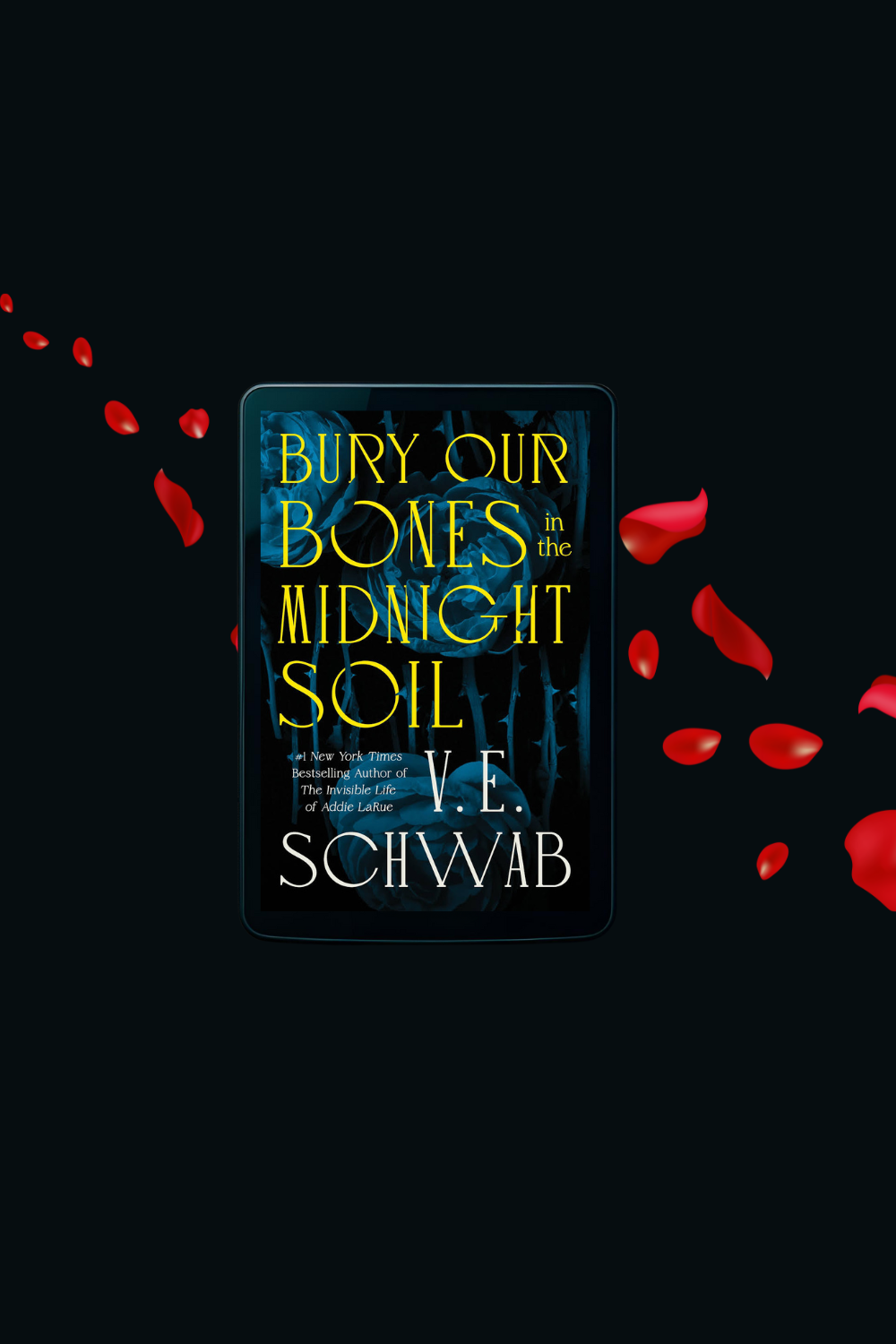
  • Book Review: Bury Our Bones in the Midnight Soil by V.E.Schwab

    Book Review: Bury Our Bones in the Midnight Soil by V.E.Schwab


    Overall Rating: ★★★★☆ (4/5 stars)

    Bury our Bones in the Midnight Soil is a stand-alone novel by V.E.Schwab, published in 2025. The story follows the lives of three queer women and their desire to find freedom and an authentic life.

    My rating is based on the fact that the book was an enjoyable read with amazing writing and great themes. I had some issues with the pacing and the ending, so that’s what made it a four instead of a five star read.

    Please note: This review contains major spoilers. If you haven’t read the book and prefer to go in blind, consider returning after you’ve finished it.

    The Story

    As previously mentioned, we follow three women: Sabine, Alice and Charlotte. We are first introduced to Sabine in the 1500s in Santo Domingo de la Calzada, then to Alice in 2019. We get a brief teaser of Charlotte’s perspective in 2019, but her story is told in the last third of the book.

    Sabine, born Maria in Santo Domingo de la Calzada, quickly realizes her life is destined for marriage and motherhood. She decides to take matters into her own hands and finds a wealthy husband, but even that does not grant her the freedom she wanted. As a child, Sabine meets a mysterious widow that resurfaces in the same city in which Sabine ends up living with her husband’s family, and under their strict surveillance. Longing to break free, she accepts the widow’s shadowy offer for freedom, which results in her being turned into a vampire. 

    We follow Sabine as she meets other vampires and find out more about the limitations of the new life she has been given, including the fact that vampires might think themselves immortal, but they aren’t. Their lives are long, but they eventually lose their humanity piece by piece. Most vampires Sabine meets describe it as rotting or decaying. 

    Alice’s story contrasts Sabine’s historical setting with a modern, urban one. A Scottish college student in Boston, trying to start a new life, she’s turned into a vampire after a one-night stand. Desperate for answers, she begins searching for Charlotte, the woman she spent the night with.

    Charlotte’s tale begins in 1870s England, where a forbidden kiss leads her family to send her to London to marry. Instead, she meets Sabine, who offers her the same dark choice she once received—with incomparably more introduction to it than she had gotten. Charlotte accepts, and the two spend a hundred years  together—until Sabine’s violence drives them apart. Bound by a promise Sabine tricked her into making, Charlotte cannot kill her and spends the next century running, watching Sabine harm the women she loves, including Alice. 

    In the final act, Charlotte convinces Alice to kill Sabine, claiming it will restore Alice’s humanity. Alice succeeds, but when Charlotte arrives, Alice—betrayed and afraid—kills her too.

    The Characters and the Themes

    I loved the central themes of freedom, going against the expectations and carving out your own path even when the world tries to place you in a box. Sabine and Charlotte share the fact that they were born at a time when societal norms did not allow them to explore their sexuality or even their own lives. Their stories are equated with hunger and love, and I’d say they are the exploration of what happens when you cannot find satiety or true love, in the sense of an intimate and healthy relationship. Sabine and Charlotte taking agency in the only way they thought possible is a powerful act of defiance.

    Alice’s story contrasts Sabine and Charlotte because unlike the two women, she was born at a time and in a place where and when a woman can pursue an education, choose who she marries and how she lives her life. However, she carries with her a complicated family story. She had to deal with the loss of her mother as a child, a father that didn’t know how to deal with the loss of his wife, or the grief of his two daughters, a stepmother who tried to do her best, and the eventual loss of Alice’s older sister. Her move to Boston to study was an escape attempt, and yet it gets almost cruelly snatched away by her being turned into a vampire. Her story is one of rage, and to an extent, taking back control. 

    However, the characters were just a bit too difficult for me to connect to. From the very start, Sabine is a calculating woman who gets progressively colder and more cruel. However, it’s very difficult to judge her, given that the root of her morals and values lies in the way she was treated her whole (human) life. I’d say I wanted her to get her freedom, to grow her orchard and eat cherries in peace, but even while she had those simple desires, they were laced with something arrogant, difficult to put a finger on. Her progression into an outright villain is steady, but not surprising. Understandable, but not justifiable.

    Charlotte, to me, came across as an unthinking, foolish woman once she knew Sabine was hunting her but doesn’t adjust her behavior at all. She kept sleeping around and, well, hoping for the best? Alice thinks, in the final confrontation with Charlotte, that she can finally see her clearly, as the girl who danced with Sabine, who “butchered families in their home” and “who let girls die because she couldn’t bear to sleep alone”. But Charlotte’s life was very long. Being alone for hundreds of years must have sounded terrifying to someone who desired connection and love as much as she did. In a way, I found her to be a lost girl, just wanting to escape a life she did not want to live and making a very poor choice in going to Sabine as her ticket out of it. I can even understand how she tries to justify Sabine over and over again, a lover stuck in a toxic relationship and in love with a horrible person, unable to break a vicious and violent cycle. Again, her motives are understandable, but her actions are difficult to justify.

    The Prose

    I loved the prose in this book. I found myself enjoying the writing even when I was not as thrilled with where the plot or the characters were. The way the author writes is captivating in a manner that’s hard to qualify. I would definitely recommend this book and pick up another book from V.E.Scwab for this reason alone.

    However, I did have some issues with the pacing and minor plot issues. I found a large part of the book quite slow, and then it picked up in the final third to do a speed-run to the end. It wasn’t a problem, but I generally prefer more balance in pacing.

    Conclusion

    Overall, I think this book might not be for everyone, but I’d still recommend it to anyone who’d like to read a book with strong central themes, queer women, and amazing writing. It being a vampire book was not a selling point for me, but this book definitely ties the themes with the inherent characteristic of vampires beautifully, and the vampires are done in a rather old-fashioned way which is oddly refreshing.

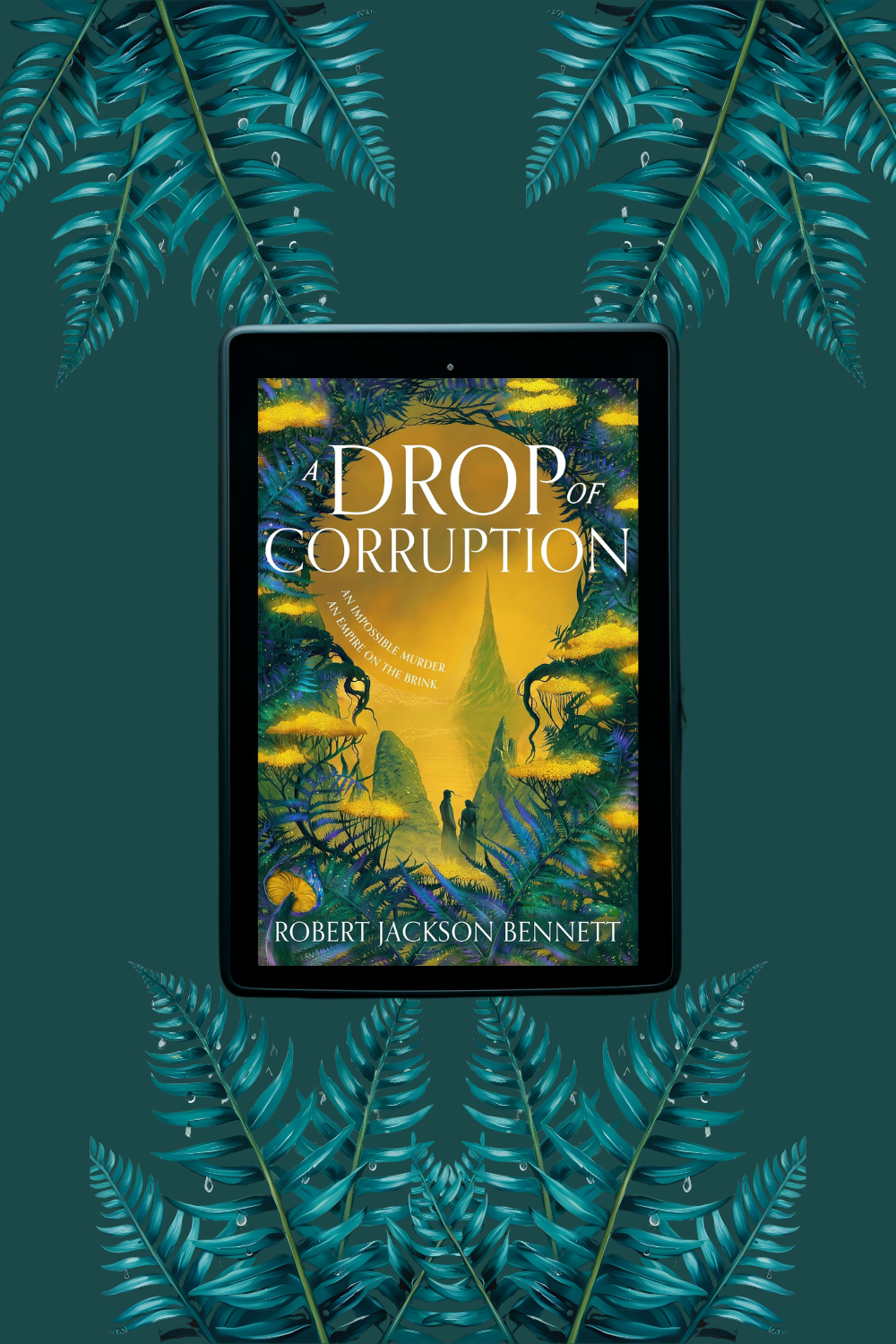
  • Book Review: A Drop of Corruption by Robert Jackson Bennett

    Book Review: A Drop of Corruption by Robert Jackson Bennett

    Overall Rating: ★★★★★ (5/5 stars)

    A Drop of Corruption by Robert Jackson Bennett is a fantasy novel published in 2025, and is the sequel to his 2024 novel The Tainted Cup.

    I loved this book. I think all of my potential misgivings with the first installment were cleared in this one, offering a delicious mystery in a high-fantasy setting, with a beautiful political thread, character development, and insanely good writing.


    Please note: This review contains major spoilers. If you haven’t read the book and prefer to go in blind, consider returning after you’ve finished it.

    Overview

    We see Ana and Din summoned to solve the murder of Immunis Mineti Sujedo, a member of the treasury delegation that arrived on high imperial business. The man disappeared from a locked room in a tower and was later found dead in the canals, leaving the entire investigation team puzzled—hence why the Iudex is summoned. There is some concern that the motive behind the murder might be purely political, as Yarrowdale is not yet part of the Empire but is set to become a formal member within the next decade. Ana and Din go on to uncover that it is much more than that; it is a ploy for both the throne and power, as well as for extracting as much financial gain from the Empire as possible.

    The brilliant mind behind the initial murder and many subsequent crimes turns out to be an accidental by-product of a plan developed by Immunis Rava Ghrelin and Commander Prificto Kulaq Thelenai. Ghrelin and Thelenai were deeply involved in the operations of the Shroud—a facility built in the Bay of Yarrow used to study and exploit the flesh of dead Leviathans, which is a key factor in the Empire’s efficiency. The two believed that the Empire had outgrown the Shroud and devised a method to simplify the process of harvesting and transporting Titan blood—by maintaining marrow that could continue to produce blood on its own. If successful, the Empire would no longer rely on the Shroud or on the extraction of fresh blood; instead, it could ship marrow to needed locations, where it would generate fresh blood on-site, thus preventing spoilage during the long journey from Yarrow to other parts of the Empire.

    I’ll pause the summary here to say that, while the use of Titan blood is disturbing in itself, this concept takes it to a whole new level. I am amazed the author managed to create such a simple yet chilling element for his book. He blends quite a bit of horror and gore into his work but excels at making simple things horrifying.

    Ghrelin and Thelenai operated in utmost secrecy because they believed the King of Yarrowdale would act against them if he learned of their work. They also knew that the transport of continuously producing Titan marrow would be a logistical nightmare and extremely dangerous, potentially resulting in mass casualties if it went wrong. To even reach the stage of “binding” marrow, as they called it, they created augury—a special form of alteration that temporarily grants a heightened mental state. It was augury that produced Immunis Sunus Pyktis, a man who worked in the Shroud on the marrow and later faked his own death to carry out a plot to take over Yarrowdale.

    Pyktis was one of the King’s children, and over the course of the book, he manages to kill both the King and his brother, the Prince, and assume the throne. This is possible because the royal bloodline is unusually full of twins and triplets, and Pyktis was a twin of the Prince. As his plot is revealed, Ana leaves it to the King and Prince’s advisor to deal with Pyktis as they see fit. Thelenai is arrested, and the marrow is secured, awaiting a future where it may be used to usher in what they call the Fifth Empire—a new era.

    The story is difficult to summarize efficiently, but I found it engaging and not nearly as convoluted when followed step by step as it seems when attempting to summarize it. I found the plot compelling and the characters nuanced. The setting was excellent—perhaps even better than in the first book. The story unfolds at a pace that is easy to follow. As with the previous book, you arrive at many of the revelations alongside the characters, which is once again a great feat for any writer to accomplish.

    Where Are Our Characters?

    Din

    Din had a lot going on in this book.

    There were a lot of money issues for him, even more so than in the previous book. His father died and left him a huge debt with the Usini Lending Group. It allowed the author to explore other sides of Din that he might not otherwise have had the chance to. I am also impressed by how mundane the plot is—because, well, yes, creditors are not something I expect in a high fantasy book. They added a certain noir element, with that touch of financial corruption and a bit of moral decay. I also like that, while we do get underdogs and people from lower classes, the way Din is impoverished is somewhat relatable—he works, pays his loans, and is still left with next to nothing for enjoyment. If that isn’t a very modern sentiment, I don’t know what is.

    Tied into Din’s financial struggles is his desire to be a part of the imperial legion. The Legion fights back the Leviathans on the sea walls and is respected and honorable.

    “Those who donned the sable uniforms saved untold lives every year, whereas I, in the Iudex, merely looked upon the dead, and could do little else.”

    Din’s struggle to find meaning in his work was also an interesting point of his character in this book. I did feel it was just a bit out of the blue, but it was well executed, so I cannot complain too much.

    “But… when we come, the deed is already done. The body is cold, the blood cleaned away. We often find the killer, but that heals nothing, as far as I can see. It only leads to a rope, or a cage, and many more tears. (…) Is it so strange a thing, ma’am, to helplessly look upon the slain and dream of instead saving lives?”

    While I don’t think we were ever supposed to seriously wonder if he’d leave Ana and go to another Iyalet, his journey to realizing that there is good to be done in the Iudex was very satisfying. It was also subtly tied to his fling with Captain Kepheus Strovi from the last book, which I thought was nicely done—I don’t think Din thought he was in love or anything, but it was clear the affair had left a lasting impact on him, and that he admired Strovi a lot and would have been happy to give the relationship a chance if it were viable.

    It was also satisfying to have the Usini Lending Group effortlessly taken down by Ana, who was looking out for Din so sweetly in this story.

    Ana

    “Just keep an eye out for the fellow with testicles large enough to cause back deformities, and we shall have our culprit!”

    I find Ana endlessly fascinating, especially as we get to see more of her, but I also find her hard to relate to. I would argue that is the whole point, so this isn’t a critique in any way. I also love her communication style so much. She is so direct, and her one-liners always hit. But she also delivered a few speeches I loved in this book.

    “This work can never satisfy, Din, for it can never finish. The dead cannot be restored. Vice and bribery will never be totally banished from the cantons. And the drop of corruption that lies within every society shall always persist. The duty of the Iudex is not to boldly vanquish it but to manage it. We keep the stain from spreading, yes, but it is never gone. Yet this job is perhaps the most important in all the Iyalets, for without it, well… the Empire would come to look much like Yarrow, where the powerful and the cruel prevail without check.

    She displayed such a keen understanding of justice and what needs to be done to achieve it, and I loved her for it.

    The revelation of what she is was also interesting, and I didn’t see it coming. It is revealed that she is probably a new version of the old Khanum, the great race that built the Empire. I always thought she had some crazy augmentations, but this is way cooler. I look forward to seeing where that character point goes in future installments.

    I also like how there’s almost a tenderness that develops over the last few chapters between Ana and Din. At the end of the book, Ana is exhausted enough to require several days of sleep, akin to an induced coma, and Din is there checking on her every day. And she in turn has a heartfelt conversation with him in the epilogue, allowing him to leave the Iudex but grateful that he decides to stay. An overall huge improvement on their already amusing and strong relationship thus far.

    Tira Malo

    By far my favorite character addition. Tira Malo is a part of the Apoths in Yarrowdale and has a past as one of the indentured servants that I think we can freely call slaves to the nobles of the realm. She is brave, dutiful, and smart, so no surprise that I love her. For a moment, I was afraid she had somehow been involved in the villainous plot, but that was thankfully not the case.

    She has built her future on the upcoming merge with the Empire, but the events of the book make her aware that she will have to find a different path soon. Ana suggests she could also become an assistant investigator, and I hope we get her own books in which she does exactly that.

    The Leviathan Threat

    “You think it’s mad, for us to talk of spirits,” said the second maid archly. “But given what they do with the Shroud out there in the bay… perhaps the ghosts of these things linger, and hate us, for all we make from their flesh.”

    Where the Leviathans were an active threat in Talagray in the first book, they are things to be experimented on in this one, and that does not decrease the horror in any way. If anything, it increases it, because the potential damage Leviathan blood and marrow can do is off the charts.

    The forest where the camp was is a brilliant example of this. The description of what had happened there is so gruesome that it’s just a tad difficult to get through. I was also listening to it in audiobook format, and the way that scene flows is just amazing.

    Din also gets a chance to visit the Shroud, and I think I expected more descriptions and for it to go more in the direction of being horrifying. The way I ended up picturing it is almost like a factory, with the business described. I really enjoyed the augurs, though, and their strange type of communication and perception of the world. They were really starved for information, and I think that drove home the point of how borderline inhuman their treatment was.

    Author’s Note

    I never skip author’s notes, but if there was only one author’s note I think you should read in this entire year, it would be this one.

    Final Thoughts

    I feel like I could talk for ages about this book. As long as this review is, I still feel like there’s so much I did not discuss, and it’s worth mentioning. The book was fun, yet it explored complex themes and offered a lot of intriguing scenes and characters. An absolute must-read.